Formula
C₁₅H₂₄

Live Menu Intelligence Across Florida Dispensaries
Terpene Atlas · Sesquiterpene
/HYOO-myoo-leen/ · α-Humulene (α-caryophyllene)
The hoppy sesquiterpene twin of caryophyllene · one big floppy ring, best known for an appetite-suppression story that good human evidence does not support.
Meet the molecule
Historically also called α-caryophyllene; it shares a synthase and often a sample with β-caryophyllene, so the two usually appear together.
Aroma spectrum
Relative prominence is illustrative, not a measured profile. Aroma is never produced by one molecule alone.
Physical identity
This describes the isolated chemical. It does not predict whether flower will be dense, sticky, purple, or frosty.
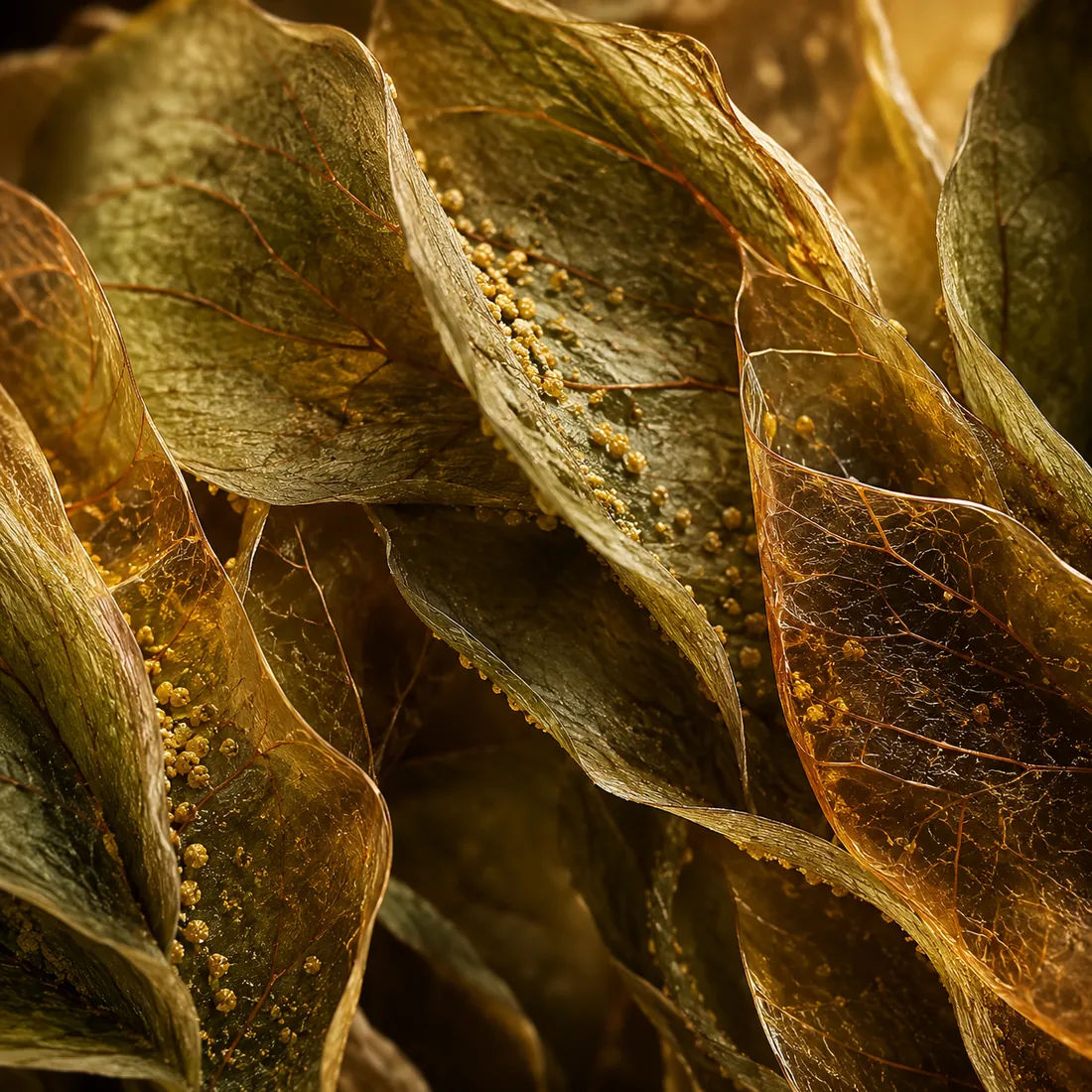 The resin, up close
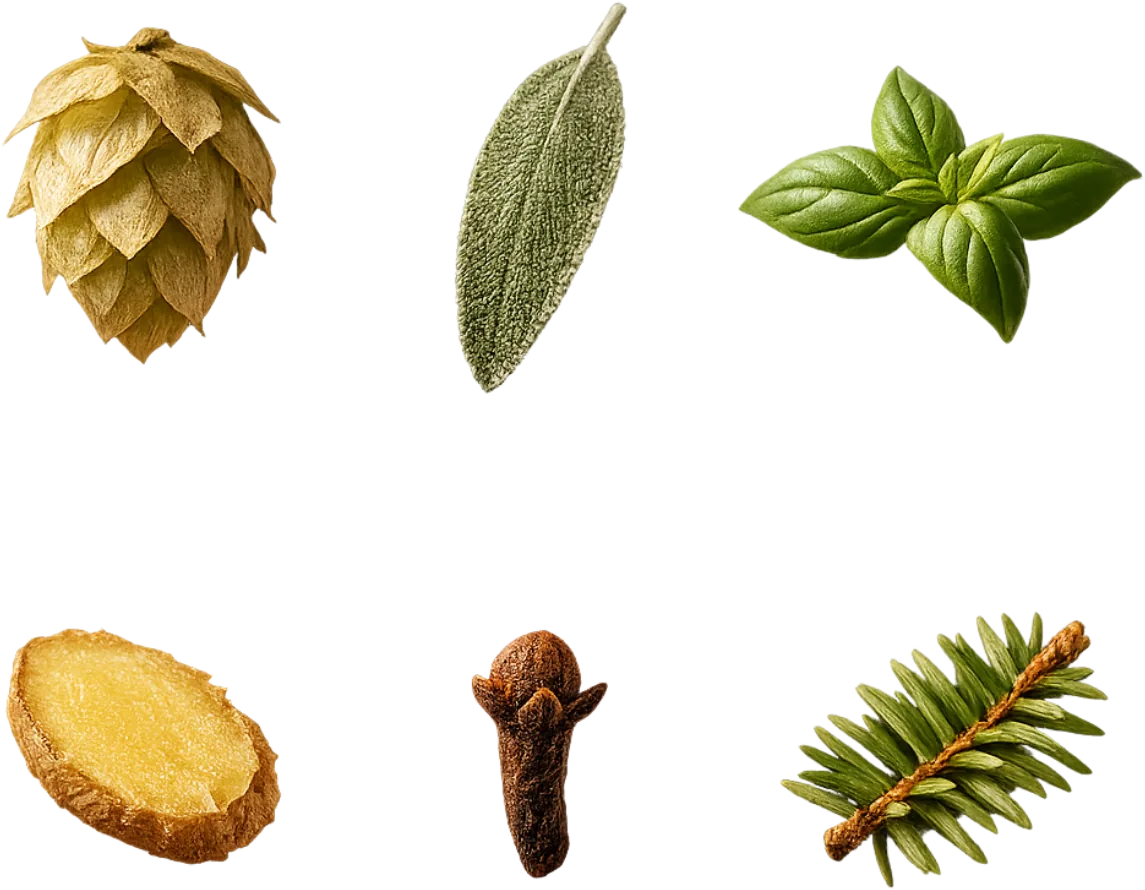
Where it appears in nature
membered carbon ring
Humulene is a single floppy eleven-membered macrocycle · the mirror-image design to its rigid sibling caryophyllene, which folds a four-membered ring instead. PubChem
Evidence ladder
Research is ranked by strength, not promised as effects. Isolated-compound findings are separated from whole-cannabis evidence throughout.
Humulene is a monocyclic C15 sesquiterpene (an eleven-membered ring) from farnesyl diphosphate; caryophyllene synthases can make both it and caryophyllene.
No reliable intoxicating, stimulating, or sedating effect has been established for humulene.
Isolated humulene has shown preclinical anti-inflammatory, antioxidant, antimicrobial, and analgesic activity.
Prized for beer aroma, and used in fragrance, essential oils, and botanical pest-defense research.
No established medical use exists. Humulene is being investigated for inflammatory disorders and pain.
Myth vs evidence
A widespread claim treats humulene as an appetite suppressant that offsets the cannabis ‘munchies.’ It is a tidy story with thin support.
Claims that humulene reliably suppresses appetite in cannabis users are not supported by good human evidence. A panel value does not predict how hungry a product will make a given person.
Where it sits
Objective chemistry and how often it shows up · not effects. Every authored terpene is plotted on each track; Alpha-Humulene is lit, the rest stay faint. The picture fills in as the Atlas grows (10 plotted so far).
Its strongest sensory class, brightest to deepest.
How often it leads a profile. Qualitative, not measured.
Lower boils off sooner, reading as an earlier top note.
C10 monoterpenes are lighter than the C15 sesquiterpenes.
| Terpene | Dominant aroma family | Prevalence in cannabis | Volatility · boiling point | Molecular weight |
|---|---|---|---|---|
| Myrcene | Earthy | very common | 167 °C | 136 g/mol |
| Limonene | Citrus | very common | 176 °C | 136 g/mol |
| Pinene | Pine | common | 155 °C | 136 g/mol |
| Linalool | Floral | common | 198 °C | 154 g/mol |
| Beta-Caryophyllene | Spice | very common | 262 °C | 204 g/mol |
| Alpha-Humulene this page | Herbal | moderate | 270 °C | 204 g/mol |
| Terpinolene | Fresh | moderate | 186 °C | 136 g/mol |
| Ocimene | Fruity | uncommon | 177 °C | 136 g/mol |
| Alpha-Bisabolol | Floral | uncommon | 314 °C | 222 g/mol |
| Nerolidol | Woody | uncommon | 276 °C | 222 g/mol |
Prevalence is a qualitative ordinal, not a measured concentration. Boiling points are approximate atmospheric-pressure values; the heavier sesquiterpenes are usually distilled under vacuum, so those figures are extrapolated.
Terpene neighborhood
On a certificate of analysis
A terpene’s absence from a panel can reflect the panel’s method or detection limit · not true absence. Values swing batch to batch.
In products
Hoppy, herbal-woody chemovars
Safety & handling
Pure terpene isolates are concentrated industrial chemicals · not the trace amounts in flower. Do not ingest undiluted isolates or apply them to skin without an appropriate dilution.
A product’s terpene panel cannot reliably predict an individual’s appetite, response, or sedation. Cannabinoid dose, route, tolerance, other medications, and personal biology usually matter more.
As a sesquiterpene, humulene is less volatile than monoterpenes but is still altered by heat and air, and can oxidize to humulene epoxides.
Explore
Same molecule, three lenses. The information is identical in every mode.
Keep exploring
Last reviewed 2026-07-22 · TerpAlerts editorial